



Opportunity, not capability, holds Sabah back
Published on: Monday, June 29, 2026
By: Sherell Jeffrey
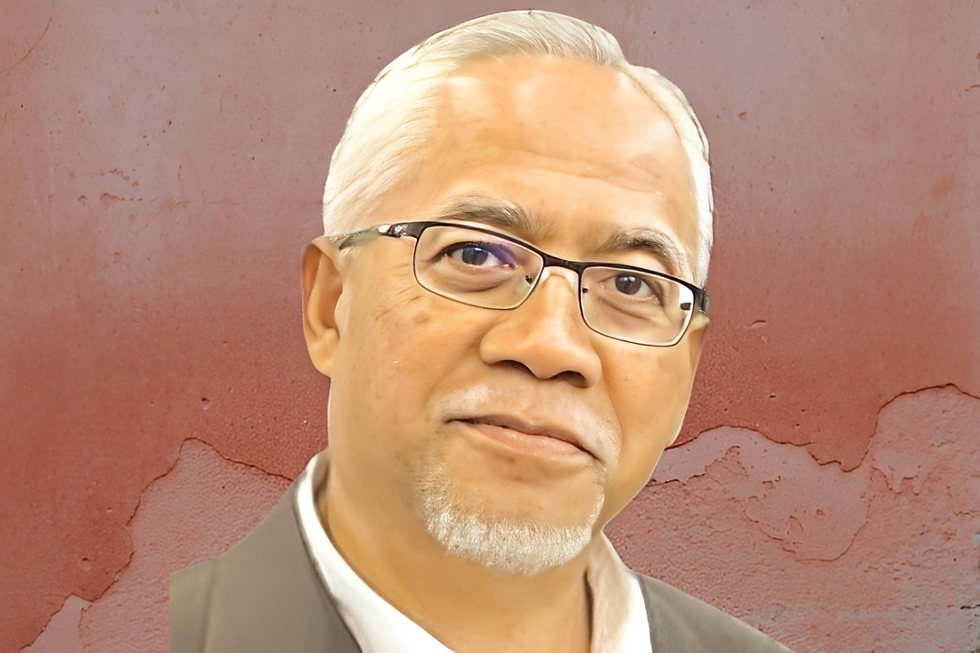
Kota Kinabalu: Sabahan oil and gas vendors are not lacking in capability but have been consistently denied the scale of work needed to prove themselves, according to industry veteran, Omar Suhaimi Abu Hassan.
The 40-year oil and gas veteran including 25 years with Petronas, told the 13th Sabah Oil, Gas and Energy Conference and Exhibition (SOGCE) that the problem was structural, not personal.
“The capability is always there, but if you are not given the opportunity, it is like a talent contest. You have your talent but there is no contest for you to show what you can do. You cannot just sing in the bathroom by yourself,” said Omar, who is currently Unsur Hebat Sdn Bhd Business Advisor.
He pointed to more than 300 licensed oil and gas companies now operating in Sabah, with between 110 and 115 of them members of SOGSC, as evidence that local talent exists.
He said around 20 to 25 of those companies were already active in the field.
He cited the Sabah-Sarawak Gas Pipeline as a concrete example of what Sabahans could deliver when given the chance. Between 2018 and 2022, an engineering consultancy he worked alongside deployed locally trained inspectors of works across the full 512-kilometre Sabah portion of the pipeline.
“The geologist heading the slope inspection work is a Sabahan lady. The civil engineers are all Sabahan. The only non-Sabahan is the project manager from Selangor,” Omar said.
He said the company had trained between 30 and 40 people through the project, each of whom could now walk into any pipeline inspection role with four years of documented experience behind them.
He said the key condition for that outcome was a partner willing to invest in local talent rather than bringing in workers from elsewhere in Malaysia.
“It must work both ways. Your partner who comes from outside of Sabah must be willing to give you the chance to prove yourself,” he said.
Additionally, he said the procurement system is creating barriers for new Sabah oil and gas entrants.
Thick tendering documents, demanding compliance requirements and track record clauses that newly licensed companies cannot possibly meet are blocking Sabahan vendors from competing fairly in oil and gas procurement, he said.
He said procurement policies, while necessary, were being applied in ways that disadvantaged companies new to the industry.
“The tender document will be very thick. The Know Your Counterparty document alone can run up to 140 pages. If you are not conversant in those areas, you spend your time not submitting your actual technical proposal but answering compliance questions,” he said.
He said companies were also required to demonstrate years of Malaysian track records for work they had only recently become licensed to perform.
“You approve this company to the bidders list because they have the Standardised Work and Equipment Category (SWEC). But when you issue the invitation to bid, there is a requirement to show proof that you have done this work in Malaysia for the past three years.
“Where can you get that experience if you were only recently licensed to perform? he said.
He added that two-week bidding periods were often insufficient, with the Health, Safety and Environment (HSE) questionnaire alone taking up to three days to complete.
“Companies also had to demonstrate compliance with HSE policies, submit loss-time records and satisfy emerging environmental, social and governance requirements,” he said.
Omar acknowledged that production sharing contract operators must follow procurement standards set by Petronas in order to qualify for cost recovery, leaving little room for discretion at the local level.
He said Petronas had been in discussions about revising its SWEC licensing system, which currently lists around 1,148 work categories, with some scope areas carrying so many overlapping categories that vendors are forced to apply for new SWECs monthly just to remain visible in the procurement listing system.
He called on SOGSC to escalate vendor pain points to the local Petronas office, saying the issues were well known but required formal representation to drive change.
“These are the real issues. Hopefully SOGSC or the Malaysian Oil, Gas and Energy Services Council (MOGSC) will raise this with Petronas group procurement,” he said.
He also noted that Petronas offered free training under its sustainability programme, with 125 Sabah oil and gas companies already having attended sessions, and urged vendors to use such resources while advocacy on procurement reform continued.


Comments